Cladding Inspections using Rope Access methods
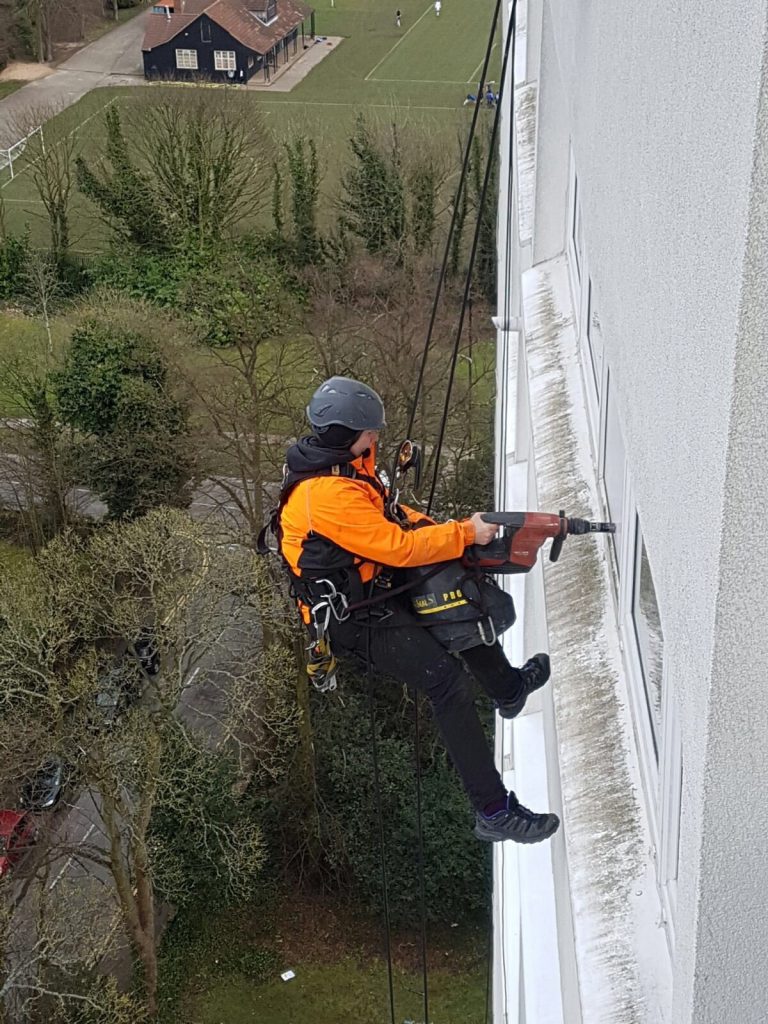
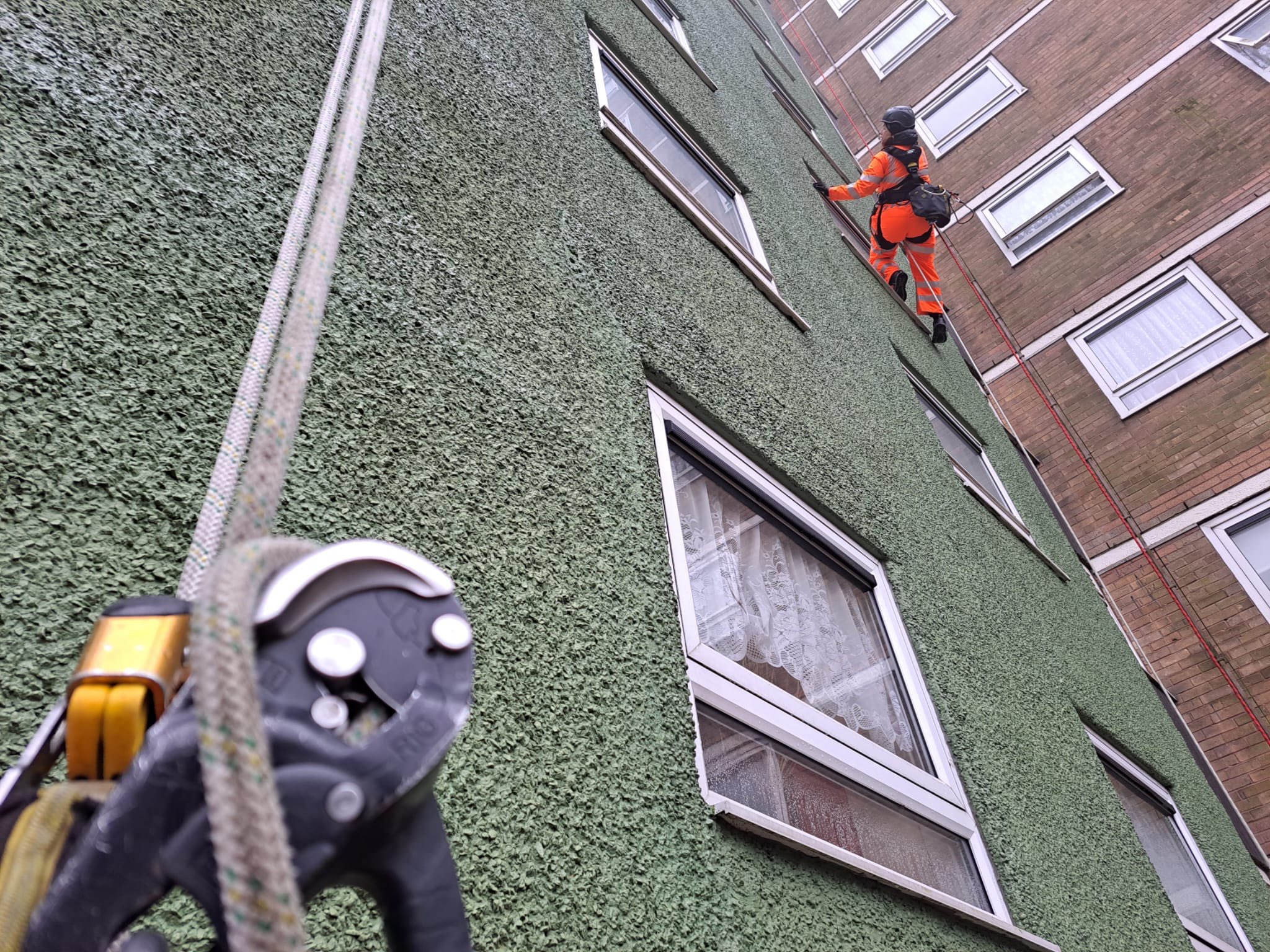
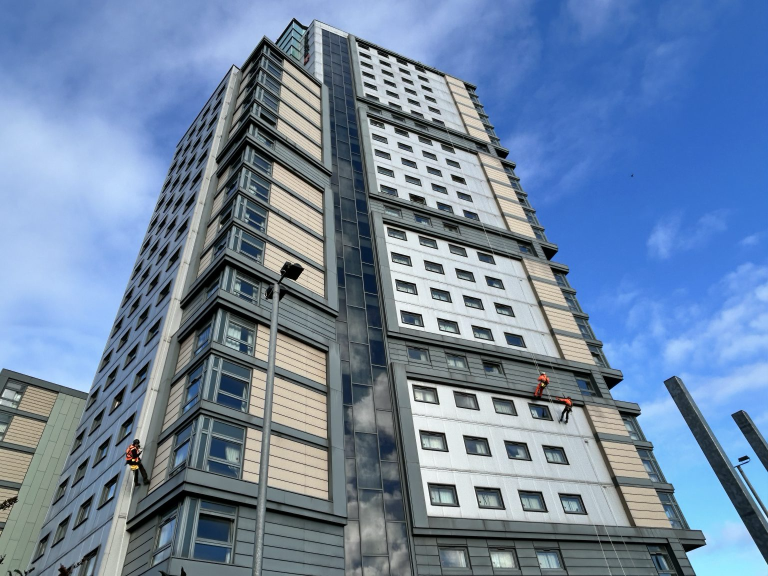
Cladding Inspection using Rope Access refers to the process of examining the condition of a building’s exterior cladding, whether it is of metal, stone or brick construction, by having Our trained technicians access the facade using rope access techniques, essentially abseiling down the building to reach and inspect hard-to-reach areas that would be difficult or costly to access with traditional scaffolding methods; this allows for a thorough assessment of the cladding’s integrity, identifying any damage, defects, or potential safety concerns without major disruption to the building occupants or operations.
Using this method is extremely cost effective compared to other forms of access ie MEWP or Scaffold although these methods do have their place in Industry, they don’t compare to the overall speed and efficiency of using Rope Access.
Cladding and Fire Safety
Following the Grenfell Tower fire in 2017, concerns have been raised about the fire safety of cladding. Some types of cladding are less fire-resistant than others, with wood and uPVC being more prone to catching fire. However, ACM (aluminium composite material) is considered to be the most combustible cladding. ACM cladding was used in the Grenfell Tower.
Designed as an affordable, lightweight insulation solution, ACM cladding is made up of two skins of aluminium sandwiched around a core material, such as polyethene (PE) or polyurethane (PUR). The problem comes from the fact that these core materials are highly-combustible, turning ACM cladding into a serious fire risk. This is the reason why we undertake FRAEW for compliance of PAS 9980. Our Rope Access Teams have extensive knowledge in undertaking both visual surveys and intrusive investigations to high rise buildings.
FRAEW using Rope Access Methods
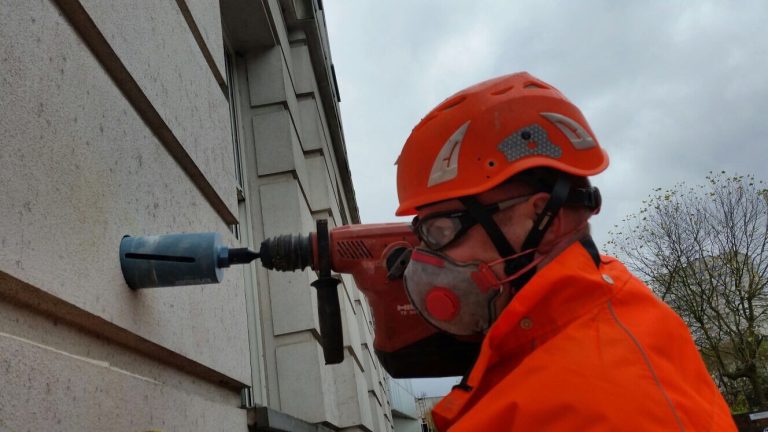
Where Fire Break and Insulation materials are not known, using our Rope Access Teams, we can undertake high level intrusive surveys to cladding and cladding substructure, to provide UKAS Laboratories the materials directly from the building facade (external wall system) to allow identification of the sample and it’s characteristics such as the product original manufacturer and the inherent combustibility of the material.
The Construction Design Management Regulations (CDM) specify that a building must have an accompanying Health and Safety File (or Operation and Maintenance Manual (O&M) since 2015, for older buildings, there is generally limited information. With this knowledge, the only practical way of establishing a more in-depth assessment is to undertake an intrusive survey, and by far the most cost-effective way to access elevations is by using Our Rope Access Teams.
Fire Safety Cladding Surveys establish and determine the requirements for the remediation of the building facade or removal of unsafe cladding, allowing the building to be made safe, thus removing the requirements for costly Waking Watch building safety programmes.
What is a FRAEW?
Fire Risk Appraisals of External Walls, which are specialist assessments of a building’s external cladding and wall systems to evaluate the risk of fire spread. These surveys are a key part of the UK’s post-Grenfell fire safety regulations for multi-occupied residential buildings.
Purpose and Methodology
The primary purpose of a FRAEW is to assess the risk to life posed by the external walls and determine if remedial action is required. They are conducted in accordance with the British Standards Institution’s (BSI) PAS 9980:2022 code of practice, which provides a risk-based, proportionate methodology for assessors.
The process involves:
- Information Gathering:
Reviewing design documents and conducting intrusive inspections to identify materials (e.g., cladding, insulation, cavity barriers). - Risk Analysis:
Identifying and evaluating risk factors, such as the combustibility of materials, façade configuration, and the building’s overall fire strategy. - Risk Rating:
Assigning an overall risk rating (low, medium, or high) and recommending necessary mitigation or remediation measures.
Who Needs One?
Not all buildings require a FRAEW. They are typically necessary for multi-storey, multi-occupied residential buildings where:
- Combustible materials are present or suspected in the external wall system.
- A standard fire risk assessment identifies concerns that warrant further investigation by a specialist.
- Mortgage lenders or insurers specifically request one to assess risk.
Upon retrieval of the information gathered, the assessment must be carried out by a competent professional, such as a qualified fire engineer or a Chartered Surveyor with relevant expertise.