
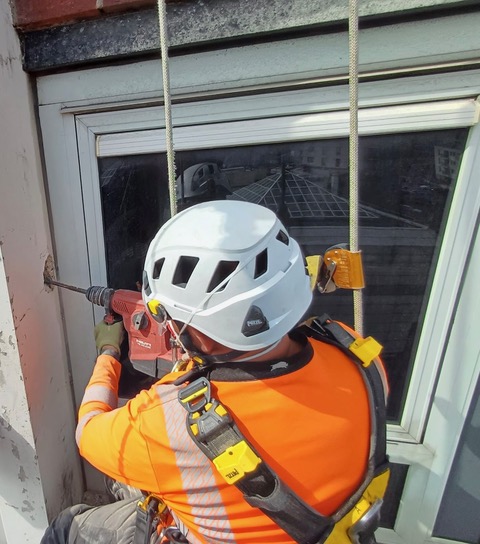
We recently carried out an intrusive rebar investigation to a 1960s office block in Romford, Essex. This involved physically accessing and examining the reinforcing steel (rebar) within a concrete structure.
This is typically done to assess the condition of the rebar, determine its depth and spacing, and evaluate the concrete cover. Common techniques can sometimes include coring, extraction of rebar samples, and breaking out small areas of concrete for direct observation.
Here’s a more detailed breakdown:
Purpose:
- Confirming design details:
Checking if the rebar is placed according to the original design plans, including diameter, spacing, and depth.
- Assessing corrosion:
Identifying and evaluating the extent of rebar corrosion, which can weaken the concrete structure.
- Determining concrete cover:
Measuring the thickness of concrete protecting the rebar, which is crucial for preventing corrosion and ensuring structural integrity. On this occasion to measure concrete cover, we used the Elcometer 331 covermeter.
Methods:
- Breaking out concrete:
Creating small openings in the concrete to expose the rebar for visual inspection and measurement.
Importance:
- Intrusive investigations are essential when non-destructive methods are insufficient or inconclusive.
- They provide direct evidence of rebar condition and concrete properties, which is crucial for accurate assessment and repair decisions.
- By combining intrusive and non-intrusive methods, we can get a comprehensive understanding of the structural integrity of the concrete element.
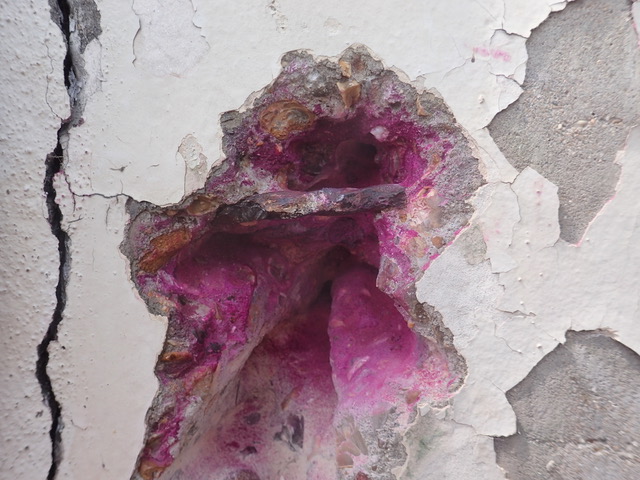
As part of the process of the intrusive survey, we also carried out Carbonation Tests and collected concrete dust samples for Laboratory Testing for Chloride-ion and High Alumina Concrete content.
Why carry out these tests?
When a building’s purpose changes, concrete testing may be necessary to assess the structure’s suitability for its new use.
This involves evaluating the concrete’s existing strength and condition to ensure it can safely support the intended loads and functions. Tests can include both non-destructive and destructive methods, depending on the specific needs of the project.
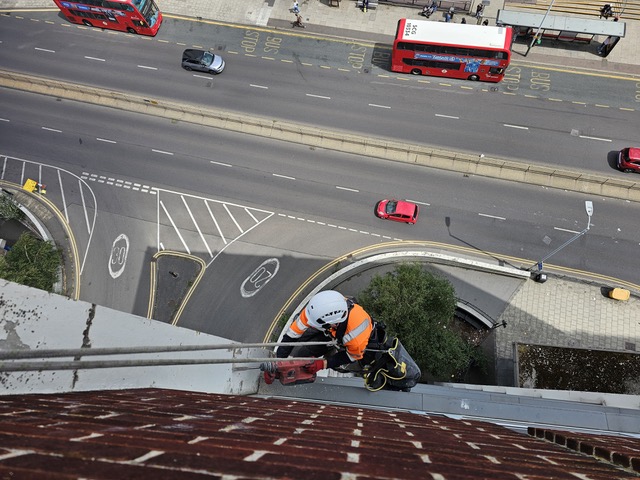
Using Our Rope Access Team, we carried out the works over a 3-day period which involved using our portable anchorage systems located on the roof so our technicians could descend the building safely.
A written report as well as photographic evidence of test locations were supplied to the client, which will form part of the desktop study for the structural engineer to view.