
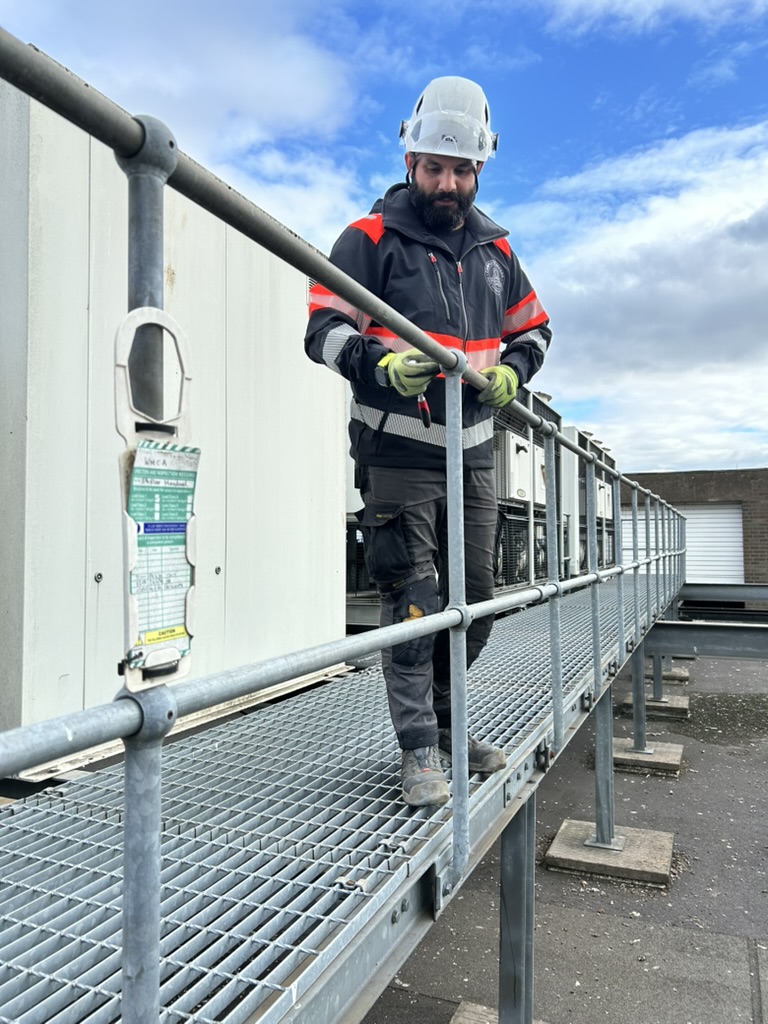
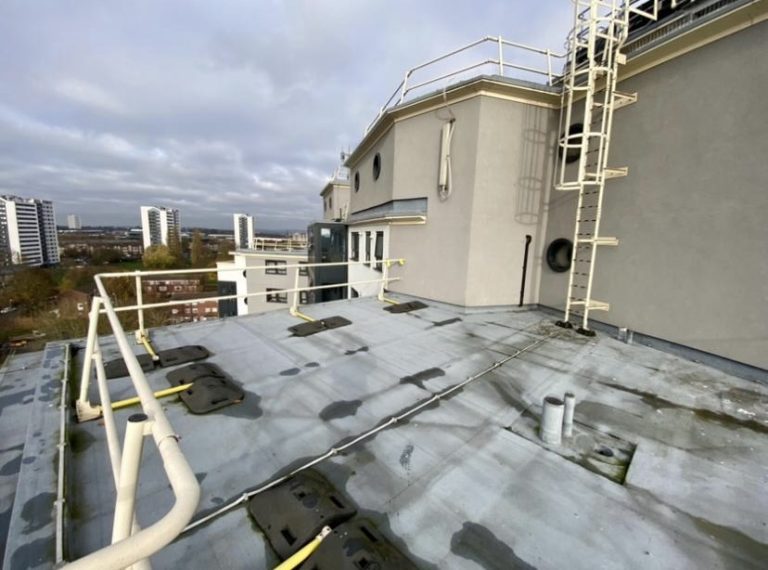
These are collectively known to be used as Building Edge Protection for any person Working at Height for Fall Prevention.
Whether fixed or freestanding, these systems are designed to provide safe access where roof access is required.
It is recommended that the Edge Protection System is Inspected every 12 months and falls under Provision and Use of Work Equipment Regulations PUWER 1998 which makes it a requirement of the Duty Holder to ensure that any equipment provided is suitable for use, maintained and in a safe usable condition.
It is the duty holders responsibility to ensure that prior to use, the equipment provided is Inspected by a competent Person.
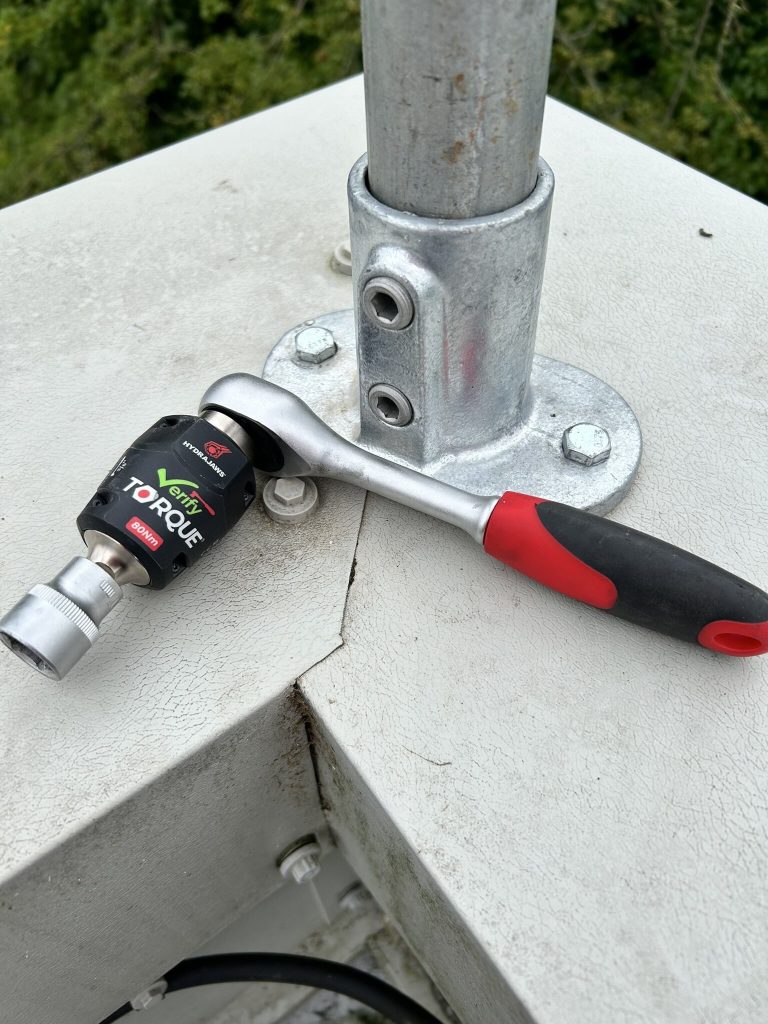
Guardrail and Handrail Inspection
Our highly skilled technicians will not only inspect your fall arrest systems; they will thoroughly check that the installed systems are actually suitable for end users to carry out their maintenance requirements, we can check that the correct PPE is used and discuss additional training if needed.
If any repairs or improvements are needed to your equipment, we will provide you a clear and concise report and estimate to carry out the works.
Fixed Ladder Inspection
Where a fixed fall arrest system are installed It is expected under PUWER 1998 to be inspected every 12 months.
A comprehensive and detailed checklist and report will be provided after the inspection. Upon satisfactory inspection, a certificate will also be issued.
All Edge Protection and Fixed Ladders will be tagged which improves safety for the end user as it increases effective communication by displaying the latest information relating to the inspection period and inspection due date.
What are the standards for roof edge protection?
There are several standards relating to roof edge protection and rooftop guardrails, including more general legislation such as The Work at Height Regulations and Workplace Health Safety & Welfare Regulations 1992. However, the most relevant are:
Building Regulations Part K (Protection from falling)
According to Part K of the Building Regulations, guardrail must be provided where there are:
- Stairs, ramps, floors which form part of the building, balconies, and any roof which people have access too, as well as
- Any light well, basement area, or similar sunken area to a building
As well as requiring that guardrail have at least two horizontal rails and a minimum height of at least 1100mm, Part K also has a loading criterion of a uniformly distributed load of 1.0kN per m2 and a point load of 0.5Kn.
EN 13374
EN 13374 relates to temporary edge protection systems and requires those systems to withstand loads applied perpendicular, horizontal and vertically.
EN 13374 outlines requirements for three classes of edge protection systems, Class A (0-10° pitch), Class B (10-30° roof pitch), and Class C (30-45° roof pitch), each of which have a static load requirement, with an additional dynamic load for B and C representing someone rolling down the slope of the roof.
EN 13374 also includes a minimum recommended wind velocity pressure of 0.6N/m. These regulations require the manufacturer demonstrate compliance in their product through testing.
BS 13700:2021
Prior to 2021, there was no standard for temporary freestanding systems used as permanent solutions, and EN 13374 was used as guidance for any freestanding guardrail system, no matter how long it was intended to be used for. This changed with the introduction of BS 13700, which applies to freestanding systems left in place permanently.
BS 13700:2021 requires that:
- All installations are designed according to the specific wind calculations in relation to location, the height of the building, and exposure level
- Each installation has a System Technical File, as outlined in BS 7883:2019, which is produced by the designer and given to the duty holder for the life of the system
- The System Technical File is made available to anyone carrying out future inspection and maintenance of the system.
- An annual inspection is carried out on permanently installed counterweighted guardrail to the manufacturer’s recommended examination regime
It is the building owner’s responsibility to ensure roof guardrail adheres to this new requirement. If you’re concerned your existing system is non-compliant, we can carry out a full guardrail inspection to put your mind at ease.
BS 4211 & BS EN 14122
BS 4211 is the British Standard for the specification of permanently fixed ladders, providing guidance on their design, construction, and installation for safe access to structures like chimneys, silos, and bins. The standard covers aspects such as the requirement for safety hoops or cages, which are often necessary for vertical access ladders exceeding a certain height, and it also specifies requirements for associated landing platforms and dimensions.
Key aspects of BS 4211:
- Scope: It applies to permanently fixed ladders with single bar rungs.
- Components: It details requirements for both the ladder itself and associated equipment, including safety features like safety hoops or cages.
- Purpose: To ensure safe access for people working at height, reducing workplace accidents.
- Applications: It covers ladders used for accessing high structures like chimneys, silos, and bins.
- Status: The most recent version was BS 4211:2005 + A1:2008, which is considered largely consistent with the more current BS EN ISO 14122-4:2016 standard.
In summary, BS 4211 provides essential safety guidelines for fixed vertical ladders to prevent falls and injuries in various industrial and commercial settings.
Do I need to get my guardrail or fixed ladders inspected?
The working at height industry recommends that collective edge protection systems such as guardrail be inspected and re-certified every 12 months, depending on how regularly they are used.
Since its introduction in 2021, BS 13700:2021 has required annual inspections of counterweighted, freestanding guardrail systems.